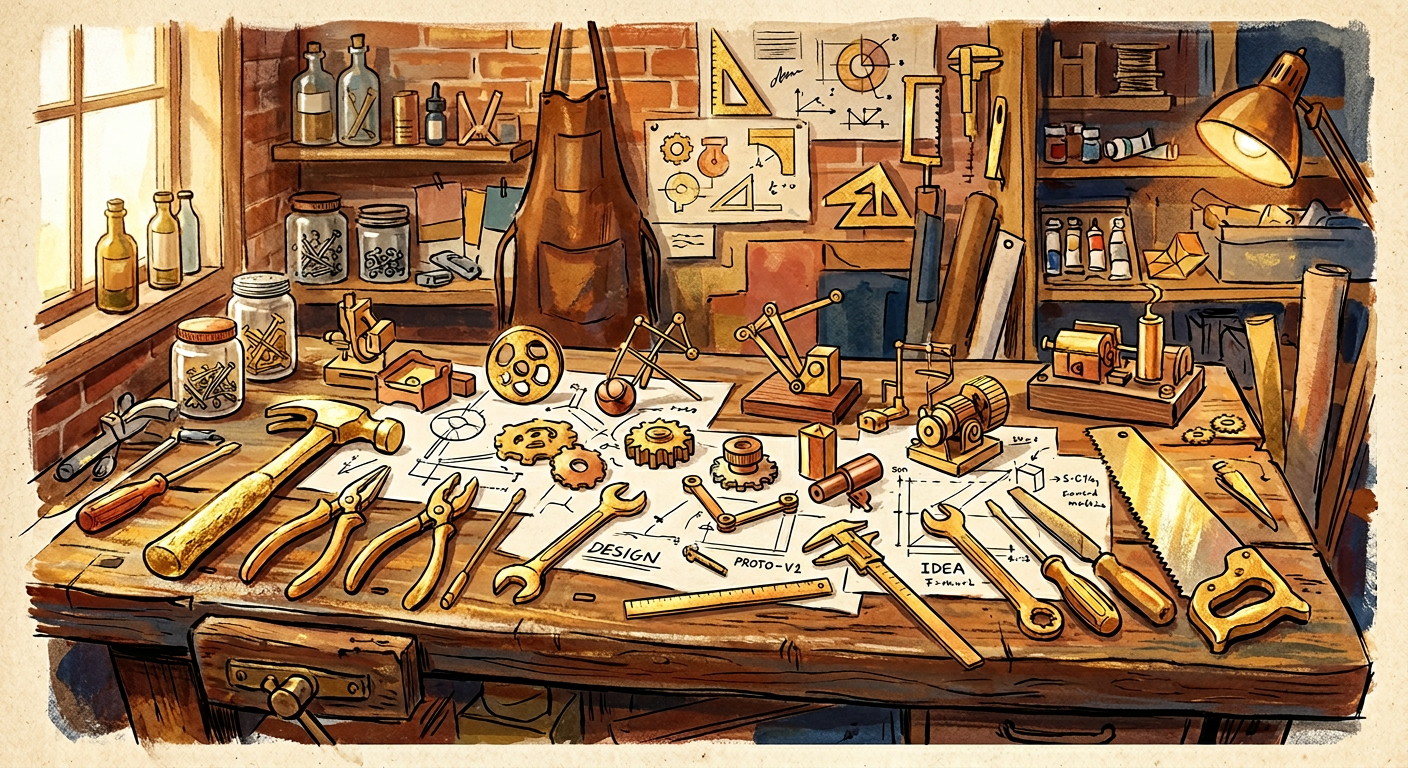
Side Projects for PMs: Building Your Shipping Muscle
Why side projects matter for PM growth, ideas to get started, and how to balance them with a demanding day job.
Why Side Projects Matter
PMs at companies work on other people's products with other people's constraints. Side projects let you experience the full product lifecycle:
- Idea
- Build
- Launch
- Iterate
There's no substitute for actually shipping something of your own.
What Side Projects Reveal
When you have to design, build, market, and support something yourself, you develop empathy for every function. You stop saying "engineering should just..." because you've felt the complexity yourself.
They also differentiate you in hiring:
| ❌ Less Credible | ✅ More Credible |
|---|---|
| "I would build an app" | "I built an app with 500 users" |
Shipping beats hypothesizing.
Ideas That Work
Start With Your Own Problems
- What tools do you wish existed?
- What workflows are annoying?
Scratch your own itch. You'll have natural motivation and deep user empathy (you're the user).
Keep It Small
Your side project shouldn't be a startup. It should be something shippable in weeks, not months:
- A newsletter
- A simple tool
- A Chrome extension
Scope down, then scope down again.
Example Ideas
- A personal task manager you actually use
- A newsletter about your industry
- A calculator for something specific
- An aggregator that filters noise
- A template library for your profession
No-Code and Low-Code Options
You Don't Need to Code
No-code tools let you build real products without engineering:
| Tool | Use Case |
|---|---|
| Webflow, Bubble | Web apps |
| Softr, Glide | Database-backed apps |
| Notion, Airtable | Internal tools |
This is liberating for PMs—you can ship without depending on anyone.
Low-Code Extends Your Capabilities
- Zapier connects services
- Basic HTML/CSS is learnable in weeks
- A little SQL or Python opens analytics possibilities
The goal isn't to become an engineer; it's to be able to ship.
AI Coding Assistants
Tools like Cursor and Copilot dramatically lower the bar. You can build working software with natural language prompts and iteration.
PMs who learn to work with AI coding tools have superpowers.
Content as a Side Project
Writing is the most accessible side project:
- A newsletter
- A blog
- A Twitter presence
It builds your reputation, forces you to clarify your thinking, and creates a body of work.
Newsletters Work Particularly Well
- Forcing function — you have to publish regularly
- Direct audience relationship — you own the email list
- Potential for monetization
Pick a Niche
Don't write about "product management in general."
Pick a specific topic:
- B2B PLG
- AI products
- Healthcare PM
- Growth tactics
Specificity attracts a loyal audience; generality attracts no one.
Communities as Side Projects
Building a community teaches product skills:
- Understanding user needs
- Fostering engagement
- Managing growth
- Handling moderation
Plus you build a network.
How to Start
- Start a Slack, Discord, or forum around a topic you care about
- Invite people
- Host events
- Create value
It's harder than it sounds—most communities fail—but the ones that work are powerful.
Community building develops skills directly applicable to PM: listening, organizing, communicating, iterating on what works.
Balancing With Your Day Job
Time Is the Constraint
You have a demanding job, and side projects compete with rest, relationships, and other life priorities. Be realistic about what you can commit.
Work in Small Increments
- An hour in the morning before work
- A few hours on weekends
Consistent small efforts beat inconsistent large ones. Ship something small rather than plan something big.
Protect Your Energy
If your day job is exhausting, adding a stressful side project won't help. Pick something energizing, not draining.
If it feels like another job, you've chosen wrong.
From Side Project to Career Asset
Document Your Learnings
Write about what you built, what worked, what failed. This becomes:
- Portfolio material
- Content for interviews
Share Publicly
Post about your side project on LinkedIn, Twitter, or product communities.
Visibility compounds—people remember you as "the PM who built X."
Prepare for Interviews
Be prepared to discuss it in interviews. Walk through your:
- Decision-making
- Tradeoffs
- Learnings
A well-articulated side project case study can carry an interview.
When to Stop
Not Everything Lasts Forever
Some side projects serve their purpose and end. You learned what you needed to learn. It's okay to shut down.
Avoid Sunk Cost Fallacy
If a project isn't serving you anymore, stop. Start something new. The point is learning and growth, not maintaining obligations.
Some Projects Deserve Commitment
If you've found something that energizes you and gains traction, lean in. A few PMs have turned side projects into companies. That's rare, but possible.
Getting Started This Week
Don't Overthink
Pick something small and start:
- Write a single blog post
- Build a landing page
- Create a simple tool in Notion
Ship something by Sunday.
Embrace Imperfection
The first version will be rough. That's fine.
Shipping something imperfect beats perfecting something that never ships.
Make It Real
Tell someone about it. Accountability helps. Share with a friend, post online.
The act of putting something in the world is what matters.
Related guides
Get the weekly digest of top product people & jobs
One email a week. No spam.